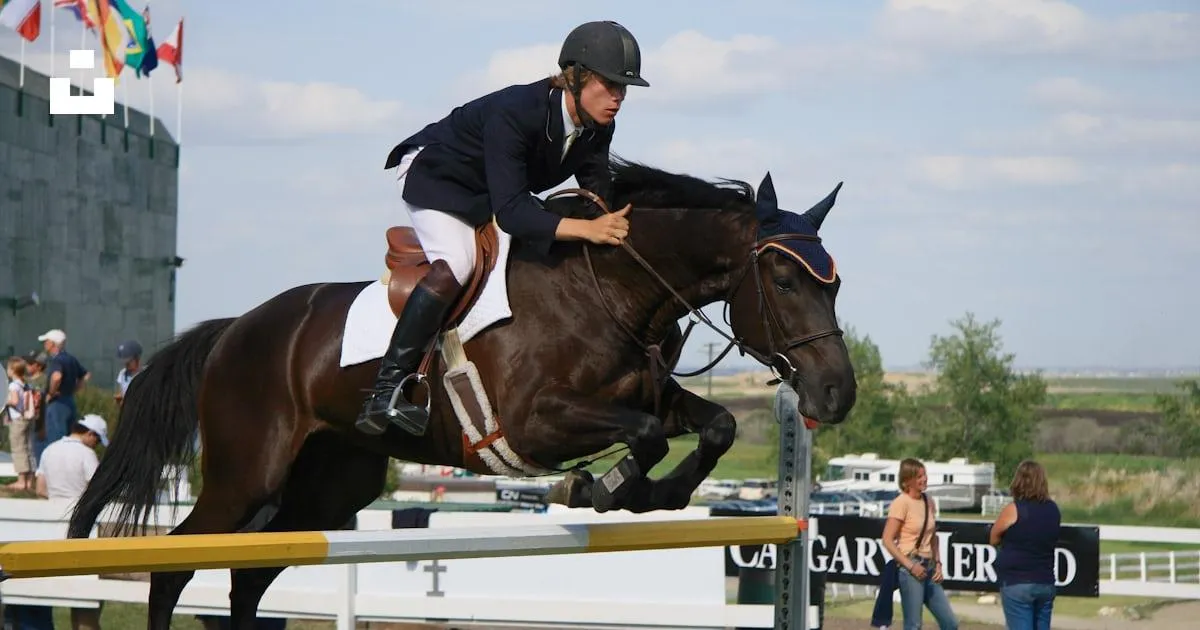
They Can Do It in Training, So What Changes in Competition?
A practical question for riding coaches when a familiar skill seems to disappear in the arena
Mary Taylor-Whyte | Founder, Mojo Performance Systems™
You’ve seen the rider do it in training. They understand the correction, and you’ve watched them execute it successfully. Then they enter the competition arena and the timing changes, the decision becomes hesitant, or the familiar mistake returns.
The technical error is real. As a coach, you need to identify it accurately and decide what still needs development. But the mistake you see may not explain everything.
What changed between the training environment and the competition arena?
The question that stayed with me
This question became important to me during my years as a showjumping Ring Steward. Working in the collecting ring, I heard riders express doubt, anticipate mistakes and worry about results before entering the arena. I watched some riders who had demonstrated the necessary skills in training struggle to reproduce them in competition.
I could see the mistakes, but I began to realise that the visible technical error didn’t necessarily tell me everything I needed to understand about what had happened.
I started supporting riders with nerves, anxiety and negative self-talk. Some of those conversations developed into formal coaching relationships, and those experiences gradually contributed to the development of Mojo Performance Systems.
That doesn’t mean every competition mistake comes from pressure. Sometimes the skill needs more work. Sometimes the task, horse, environment or preparation is different. Sometimes the technical demands and the rider’s response to the situation affect each other.
Capability and performance access
At Mojo, we use performance access as practical coaching language for the difference between demonstrating a capability and executing it reliably under the conditions the rider is facing.
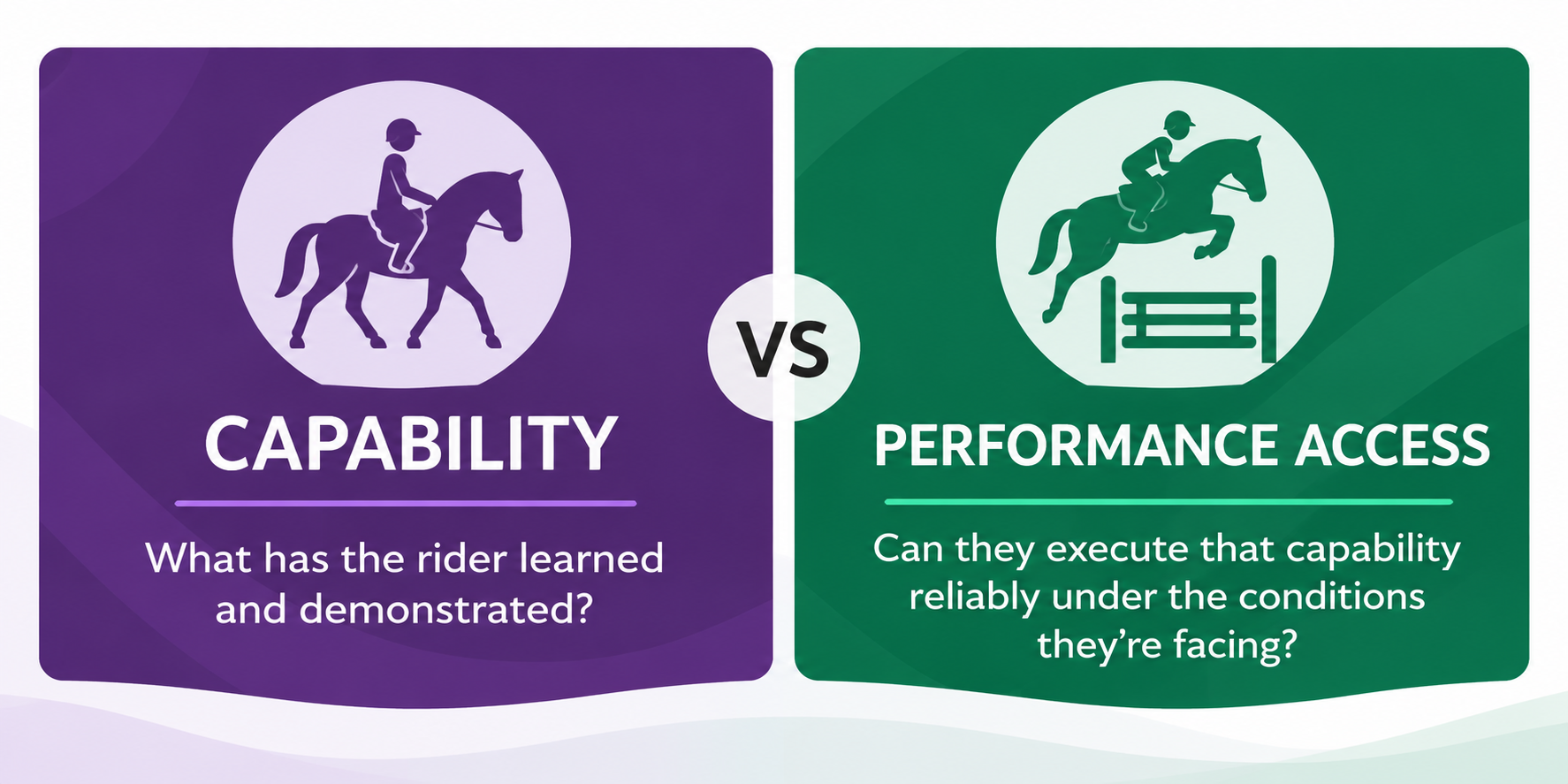
CAPABILITY
What has the rider learned and demonstrated?
PERFORMANCE ACCESS
Can they execute that capability reliably under the conditions they’re facing?
Performance access isn’t a diagnosis, and it isn’t a claim that the rider has lost the underlying skill. It’s a way of keeping the coaching question open long enough to understand what the rider may need next.
Competition isn’t simply a training session with a score attached. The course or test is set. The surroundings may be unfamiliar. The horse may feel different. Decisions may need to happen more quickly, and there may be no opportunity to stop, repeat the exercise or receive immediate feedback.
The result may matter, too. That significance can help one rider focus and make it harder for another to use their skills as effectively. We can’t know which explanation fits simply by observing the mistake.
Three questions to bring back to your coaching
1. What has the rider demonstrated consistently and under which conditions?
Look beyond one successful attempt. Consider how often they’ve repeated the skill, how much prompting they needed, whether the horse and task were comparable, and what happened when the exercise changed.
2. What actually changed in competition?
Be specific. Consider the task, environment, horse, preparation, available time and significance of the result. Listen to the rider’s account as well as reviewing what you observed.
3. What does the visible error tell me, and what does it leave unanswered?
Describe the technical mistake accurately. Then separate what you observed from what you think caused it. “The rider missed the intended distance” is an observation. “They missed it because they were nervous” is an explanation that still needs to be established.
A better-informed next step
You may conclude that further technical development is exactly what’s needed. You may identify performance-related demands that deserve attention alongside the technical work. You may find that several factors are interacting, or that you need more information before deciding.
This isn’t about replacing your technical expertise. It’s about using that expertise within a fuller understanding of the rider, horse and situation.
So think of one rider whose competition performance has differed from what you’ve seen in training. What do you know from observation? What have you heard directly from them? What are you still assuming?
Do you understand enough about why their execution changed to know what support they need next?
Mary Taylor-Whyte
The Mojo Queen
Founder, Mojo Performance Systems™
Featured photograph: Anna Khromova / Unsplash
